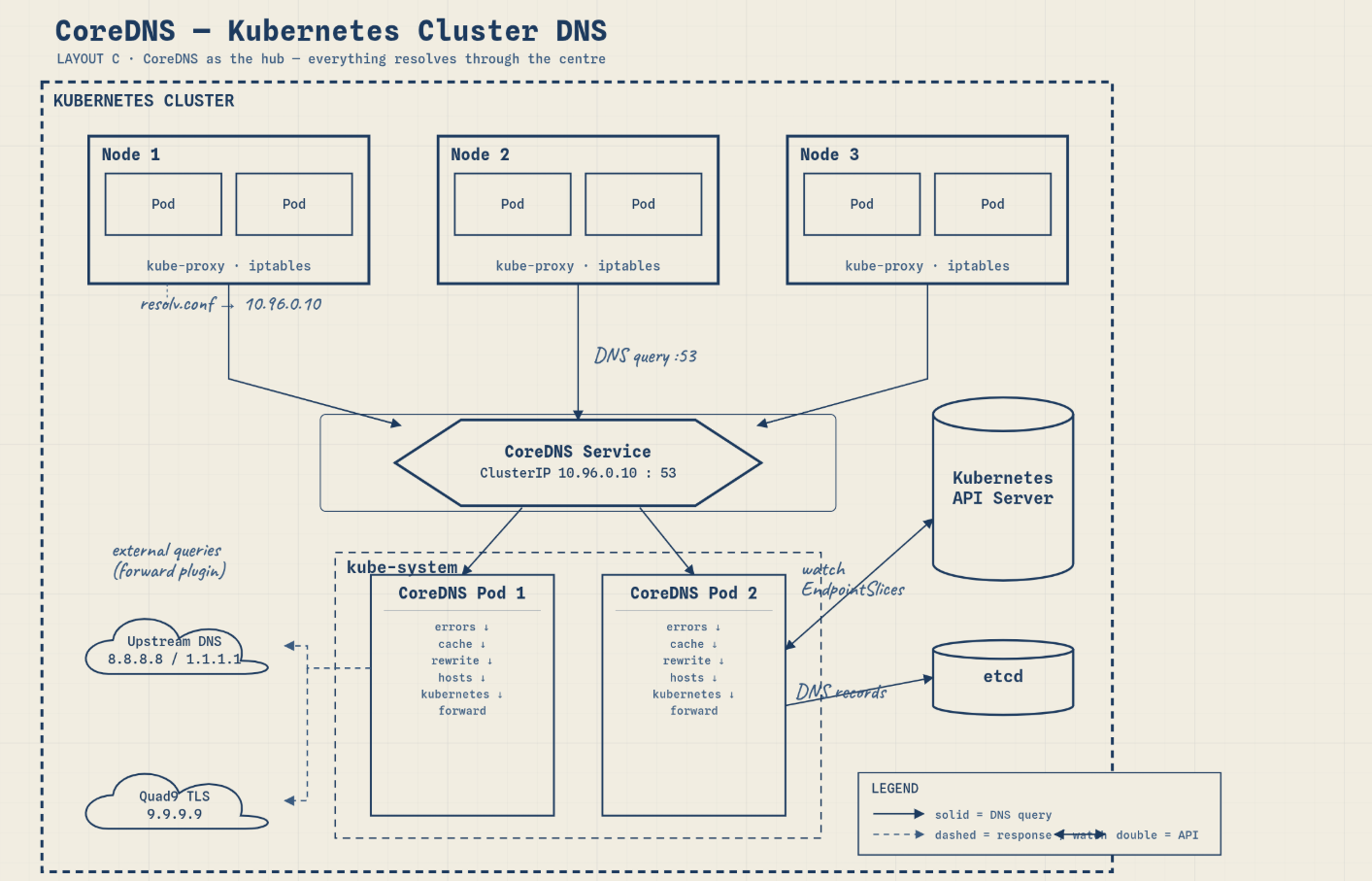
Kubernetes
Kubernetes
It’s orchestration engine and gives basic primitives to orchestrate application deployments on a low level -such as pods, jobs, deployments, services, ingress, persisten volumes, volume claims, secrets, configmaps, daemon, and statefulsets etc..
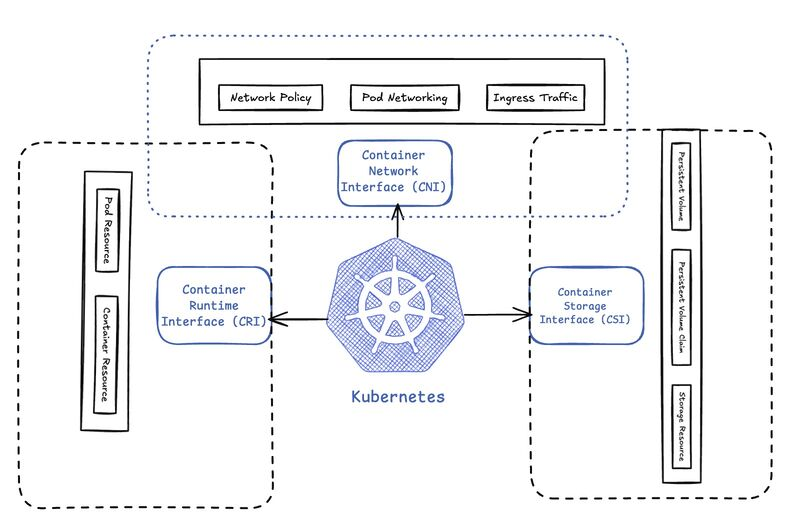
Basics
If you like cars, before diving into engine specs and horsepower, you first need to know how to drive. In this blog is no different—so before we get under the hood with intermediate concepts, let’s briefly touch on the basics to make sure we’re all on the same page. Promise we’ll keep it quick!
Setup
Verify
kubectl config view  # tells which cluster it talks to
kubectl config view --raw #
kubectl config view --minify | grep namespace #
kubectl config get-contexts $(kubectl config current-context)  # details, list every cluster your kubeconfig knows, * is active
kubectl config use-context # switch clusters
kubectl config set-context --current --namespace= # set kubectl context

kubectl api-resources --api-group=apps --namespaced=false
apiVersion: v1
clusters:
- cluster:
    certificate-authority-data: XXXX
    server: https://127.0.0.1:6443
  name: default
contexts:
- context:
    cluster: default
    user: default
  name: default
current-context: default
kind: Config
users:
- name: default
  user:
    client-certificate-data: XXXX
    client-key-data: XXXX
Kubectl CMD
| group-verb | action |
|---|---|
| READ | get |
| READ | describe |
| READ | explain |
| CHANGE | apply |
| CHANGE | edit |
| CHANGE | diff |
| RUN &DEBUG | logs |
| RUN &DEBUG | exec |
| RUN &DEBUG | port-forward |
kubectl apply -f pod.yaml --dry-run=client # does local checks; never contact API server; Good for generate yaml `-o yaml`
kubectl apply -f pod.yaml --dry-run=server # send the object and does what client can't: quota, webhooks, missing references,
kubectl apply -f pod.yaml # validates and writes to etcd
kubectl api-resources
NAME SHORTNAMES APIVERSION NAMESPACED KIND
bindings v1 true Binding
componentstatuses cs v1 false ComponentStatus
configmaps cm v1 true ConfigMap
endpoints ep v1 true Endpoints
events ev v1 true Event
limitranges limits v1 true LimitRange
namespaces ns v1 false Namespace
nodes no v1 false Node
persistentvolumeclaims pvc v1 true PersistentVolumeClaim
persistentvolumes pv v1 false PersistentVolume
pods po v1 true Pod
podtemplates v1 true PodTemplate
replicationcontrollers rc v1 true ReplicationController
resourcequotas quota v1 true ResourceQuota
secrets v1 true Secret
serviceaccounts sa v1 true ServiceAccount
services svc v1 true Service
mutatingwebhookconfigurations admissionregistration.k8s.io/v1 false MutatingWebhookConfiguration
validatingadmissionpolicies admissionregistration.k8s.io/v1 false ValidatingAdmissionPolicy
validatingadmissionpolicybindings admissionregistration.k8s.io/v1 false ValidatingAdmissionPolicyBinding
validatingwebhookconfigurations admissionregistration.k8s.io/v1 false ValidatingWebhookConfiguration
customresourcedefinitions crd,crds apiextensions.k8s.io/v1 false CustomResourceDefinition
apiservices apiregistration.k8s.io/v1 false APIService
controllerrevisions apps/v1 true ControllerRevision
daemonsets ds apps/v1 true DaemonSet
deployments deploy apps/v1 true Deployment
replicasets rs apps/v1 true ReplicaSet
statefulsets sts apps/v1 true StatefulSet
selfsubjectreviews authentication.k8s.io/v1 false SelfSubjectReview
tokenreviews authentication.k8s.io/v1 false TokenReview
localsubjectaccessreviews authorization.k8s.io/v1 true LocalSubjectAccessReview
selfsubjectaccessreviews authorization.k8s.io/v1 false SelfSubjectAccessReview
selfsubjectrulesreviews authorization.k8s.io/v1 false SelfSubjectRulesReview
subjectaccessreviews authorization.k8s.io/v1 false SubjectAccessReview
horizontalpodautoscalers hpa autoscaling/v2 true HorizontalPodAutoscaler
cronjobs cj batch/v1 true CronJob
jobs batch/v1 true Job
certificatesigningrequests csr certificates.k8s.io/v1 false CertificateSigningRequest
leases coordination.k8s.io/v1 true Lease
endpointslices discovery.k8s.io/v1 true EndpointSlice
events ev events.k8s.io/v1 true Event
flowschemas flowcontrol.apiserver.k8s.io/v1 false FlowSchema
prioritylevelconfigurations flowcontrol.apiserver.k8s.io/v1 false PriorityLevelConfiguration
gatewayclasses gc gateway.networking.k8s.io/v1 false GatewayClass
gateways gtw gateway.networking.k8s.io/v1 true Gateway
grpcroutes gateway.networking.k8s.io/v1 true GRPCRoute
httproutes gateway.networking.k8s.io/v1 true HTTPRoute
referencegrants refgrant gateway.networking.k8s.io/v1beta1 true ReferenceGrant
helmchartconfigs helm.cattle.io/v1 true HelmChartConfig
helmcharts helm.cattle.io/v1 true HelmChart
accesscontrolpolicies hub.traefik.io/v1alpha1 false AccessControlPolicy
aiservices hub.traefik.io/v1alpha1 true AIService
apiaccesses hub.traefik.io/v1alpha1 true APIAccess
apibundles hub.traefik.io/v1alpha1 true APIBundle
apicatalogitems hub.traefik.io/v1alpha1 true APICatalogItem
apiplans hub.traefik.io/v1alpha1 true APIPlan
apiportals hub.traefik.io/v1alpha1 true APIPortal
apiratelimits hub.traefik.io/v1alpha1 true APIRateLimit
apis hub.traefik.io/v1alpha1 true API
apiversions hub.traefik.io/v1alpha1 true APIVersion
managedsubscriptions hub.traefik.io/v1alpha1 true ManagedSubscription
addons k3s.cattle.io/v1 true Addon
etcdsnapshotfiles k3s.cattle.io/v1 false ETCDSnapshotFile
nodes metrics.k8s.io/v1beta1 false NodeMetrics
pods metrics.k8s.io/v1beta1 true PodMetrics
ingressclasses networking.k8s.io/v1 false IngressClass
ingresses ing networking.k8s.io/v1 true Ingress
ipaddresses ip networking.k8s.io/v1 false IPAddress
networkpolicies netpol networking.k8s.io/v1 true NetworkPolicy
servicecidrs networking.k8s.io/v1 false ServiceCIDR
runtimeclasses node.k8s.io/v1 false RuntimeClass
poddisruptionbudgets pdb policy/v1 true PodDisruptionBudget
clusterrolebindings rbac.authorization.k8s.io/v1 false ClusterRoleBinding
clusterroles rbac.authorization.k8s.io/v1 false ClusterRole
rolebindings rbac.authorization.k8s.io/v1 true RoleBinding
roles rbac.authorization.k8s.io/v1 true Role
deviceclasses resource.k8s.io/v1 false DeviceClass
resourceclaims resource.k8s.io/v1 true ResourceClaim
resourceclaimtemplates resource.k8s.io/v1 true ResourceClaimTemplate
resourceslices resource.k8s.io/v1 false ResourceSlice
priorityclasses pc scheduling.k8s.io/v1 false PriorityClass
csidrivers storage.k8s.io/v1 false CSIDriver
csinodes storage.k8s.io/v1 false CSINode
csistoragecapacities storage.k8s.io/v1 true CSIStorageCapacity
storageclasses sc storage.k8s.io/v1 false StorageClass
volumeattachments storage.k8s.io/v1 false VolumeAttachment
volumeattributesclasses vac storage.k8s.io/v1 false VolumeAttributesClass
ingressroutes traefik.io/v1alpha1 true IngressRoute
ingressroutetcps traefik.io/v1alpha1 true IngressRouteTCP
ingressrouteudps traefik.io/v1alpha1 true IngressRouteUDP
middlewares traefik.io/v1alpha1 true Middleware
middlewaretcps traefik.io/v1alpha1 true MiddlewareTCP
serverstransports traefik.io/v1alpha1 true ServersTransport
serverstransporttcps traefik.io/v1alpha1 true ServersTransportTCP
tlsoptions traefik.io/v1alpha1 true TLSOption
tlsstores traefik.io/v1alpha1 true TLSStore
traefikservices traefik.io/v1alpha1 true TraefikService
K8S 101
- Container
A sealed application package (Docker)
- Pod
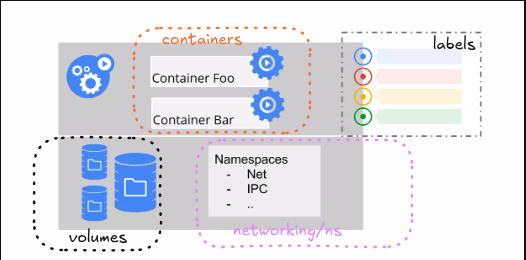
The smallest and simplest Kubernetes object. It represents a single instance of a running process in your cluster. pods are one or more containers
kubectl run web-pod --image=gcr.io/google-samples/kubernetes-bootcamp:v1 --dry-run=client -o yml > pod.yml
- Qos: Settings
requestsandlimitsinfluence thekubeletto make decision as to which pod to evicit first in the event of resource starvation
requests:: min amount of resource that pod needs.
limits:: define the max amount of resources that you need to supply for a given pod.- Guaranteed:: Every container must have both CPU and memory limits and requests defined.
requests == limits - Burstable:: At least one container has a CPU or memory request that does not equal its limit.
requests defined - Best Effort:: No containers have any CPU or memory requests or limits defined.
1st one get killed if resource starvation
- Guaranteed:: Every container must have both CPU and memory limits and requests defined.
- Pod Priority and preemption: Now, what happens if high priority comes when there are no nodes with respective pods? The scheduler will remove low-priority pods
apiVersion: scheduling.k8s.io/v1
kind: PriorityClass
metadata:
  name: high-priority-apps
value: 1000000
# preemptionPolicy: Never  # Non-preempting PriorityClass
globalDefault: false
description: "This priority class is reserved for mission-critical core applications."
---
apiVersion: v1
kind: Pod
metadata:
  name: critical-api-pod
  labels:
    app: api-service
spec:
  priorityClassName: high-priority-apps # Linking the pod-priority
  containers:
  - name: web-app
    image: nginx:latest
    # defining resource and limits
    resources:
      requests:
        memory: "256Mi"
        cpu: "500m"
      limits:
        memory: "512Mi"
        cpu: "1000m"
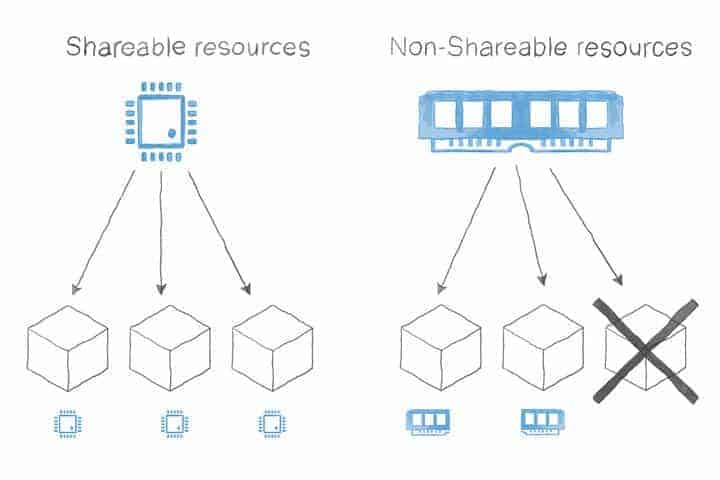
- Sharable Resources that can be shared among different consumers limited when required. CPU is sharable resources, it pod wants more than limit, it will not get terminated. Kubelet throttles the container, leads to negative performance.
-
Non sharable resources that cannot be shared by nature, Memory. when container exceeds it will get killed OOMKilled
- Health Checks:
Liveness Probe,Readiness ProbeandStartup Probe
        Application Running
                │
                ▼
        Liveness Probe
                │
          Healthy?
            /    \
        Yes      No
        │         │
        │     Restart Container
        ▼
        Continue Running
|
          Application Starting
                  │
                  ▼
          Readiness Probe
                  │
            Ready?
            /    \
          Yes     No
          │        │
          │     Don't send traffic
          ▼
          Receive traffic
|
- Labels
Identify metadata attached to objects. use to determin which objects to apply an operation to primitive objects
apiVersion: v1
kind: Pod
metadata:
  name: dev-fe
  labels:
    app: nify
    phase: dev
    role: fe
spec:
  containers:
  - name: nginx
    image: nginx:alpine
---
apiVersion: v1
kind: Pod
metadata:
  name: dev-be
  labels:
    app: nify
    phase: dev
    role: be
spec:
  containers:
  - name: python
    image: python:3.12-alpine
    command: ["python", "-m", "http.server", "8000"]
---
apiVersion: v1
kind: Pod
metadata:
  name: test-fe
  labels:
    app: nify
    phase: test
    role: fe
spec:
  containers:
  - name: httpd
    image: httpd:alpine
---
apiVersion: v1
kind: Pod
metadata:
  name: test-be
  labels:
    app: nify
    phase: test
    role: be
spec:
  containers:
  - name: golang
    image: golang:1.24-alpine
    command:
      - sh
      - -c
      - |
        cat <<'EOF' > /tmp/server.go
        package main

        import (
          "fmt"
          "net/http"
        )

        func main() {
          http.HandleFunc("/", func(w http.ResponseWriter, r *http.Request) {
            fmt.Fprintln(w, "Hello from Go!")
          })
          http.ListenAndServe(":8080", nil)
        }
        EOF
        go run /tmp/server.go
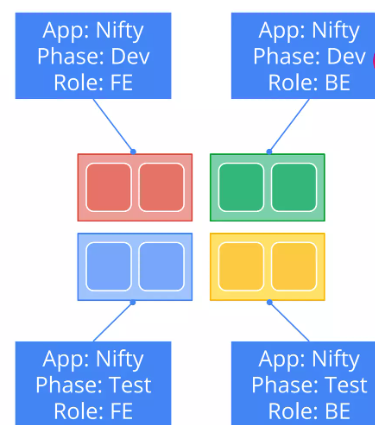
- Selector
Query against labels, producing a set result
apiVersion: v1
kind: Service
metadata:
  name: nify-service
spec:
  selector:
    app: nify
  ports:
  - port: 80
    targetPort: 80
  type: ClusterIP
- Query
App=Niftykubectl get pods -l App=Nifty kubectl get pods -l 'App in (Nifty)'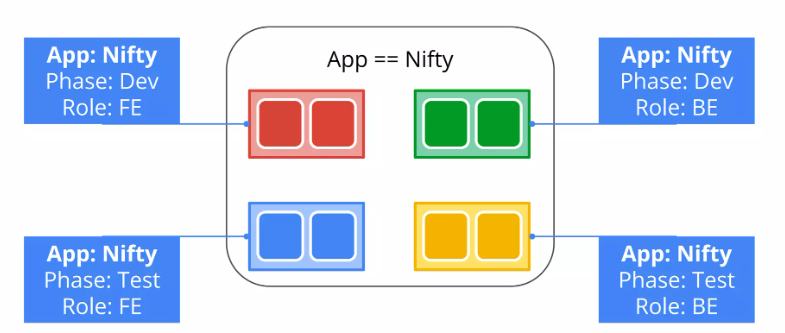
apiVersion: v1
kind: Service
metadata:
  name: nify-fe-service
spec:
  selector:
    app: nify
    role: fe
  ports:
  - port: 80
    targetPort: 80
  type: ClusterIP
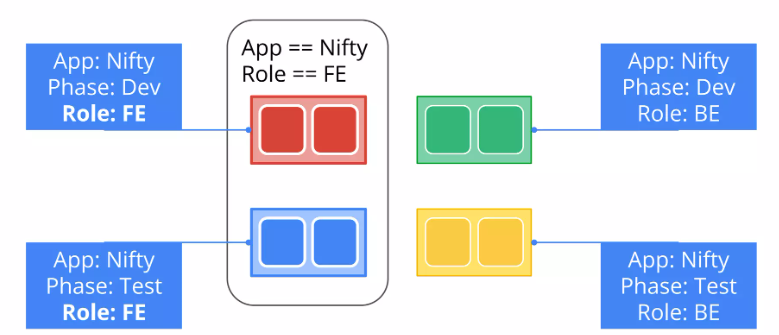
- Query
App=NiftyandRole=FE
apiVersion: v1
kind: Service
metadata:
  name: nify-dev-service
spec:
  selector:
    app: nify
    phase: dev
  ports:
  - port: 80
    targetPort: 80
  type: ClusterIP
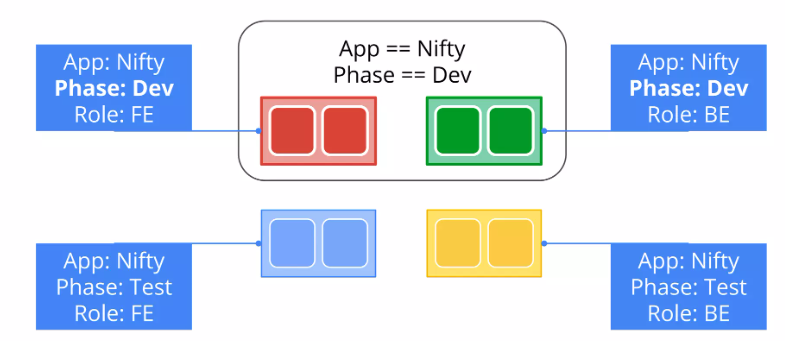
- Query
App=NiftyandPhase=Dev
To test the connection
kubectl port-forward service/SERVICE_NAME 8080:80
- Controller
A reconcilation loop that drives current state towards desired state
while(true) {
    desired = API Server
    actual  = Cluster

    if desired != actual {
        reconcile()
    }
}
- Replica Set
- Deployment
Grp of pods of the same type together to achieve load balancing. Greate for stateless workload, where exact copies of app runs and destory, maintain desired number of apps.
apiVersion: apps/v1        # workloads live in apps/v1, not core v1
kind: Deployment           # Pod → Deployment
metadata:
  name: web
  labels:
    app: web
spec:
  replicas: 3              # NEW — how many Pods you want
  selector:
    matchLabels:
      app: web             # NEW — which Pods this Deployment owns; # must match template.metadata.labels below
  template:                # everything below is the Pod, indented one level
    metadata:
      labels:
        app: web           # the Pod's own labels — must satisfy the selector; # the pod Label
    spec:
      containers:
        - name: web
          image: ghcr.io/platformrelay/workshop-web:v1
          ports:
            - containerPort: 8080
          resources:
            requests:
              cpu: 50m
              memory: 64Mi
            limits:
              cpu: 250m
              memory: 128Mi
If you plans to go for new Image
kubectl set image deployment/web web=ghcr.io/platformrelay/workshop-web:v2 # edit the pod with new template image
- Rollout
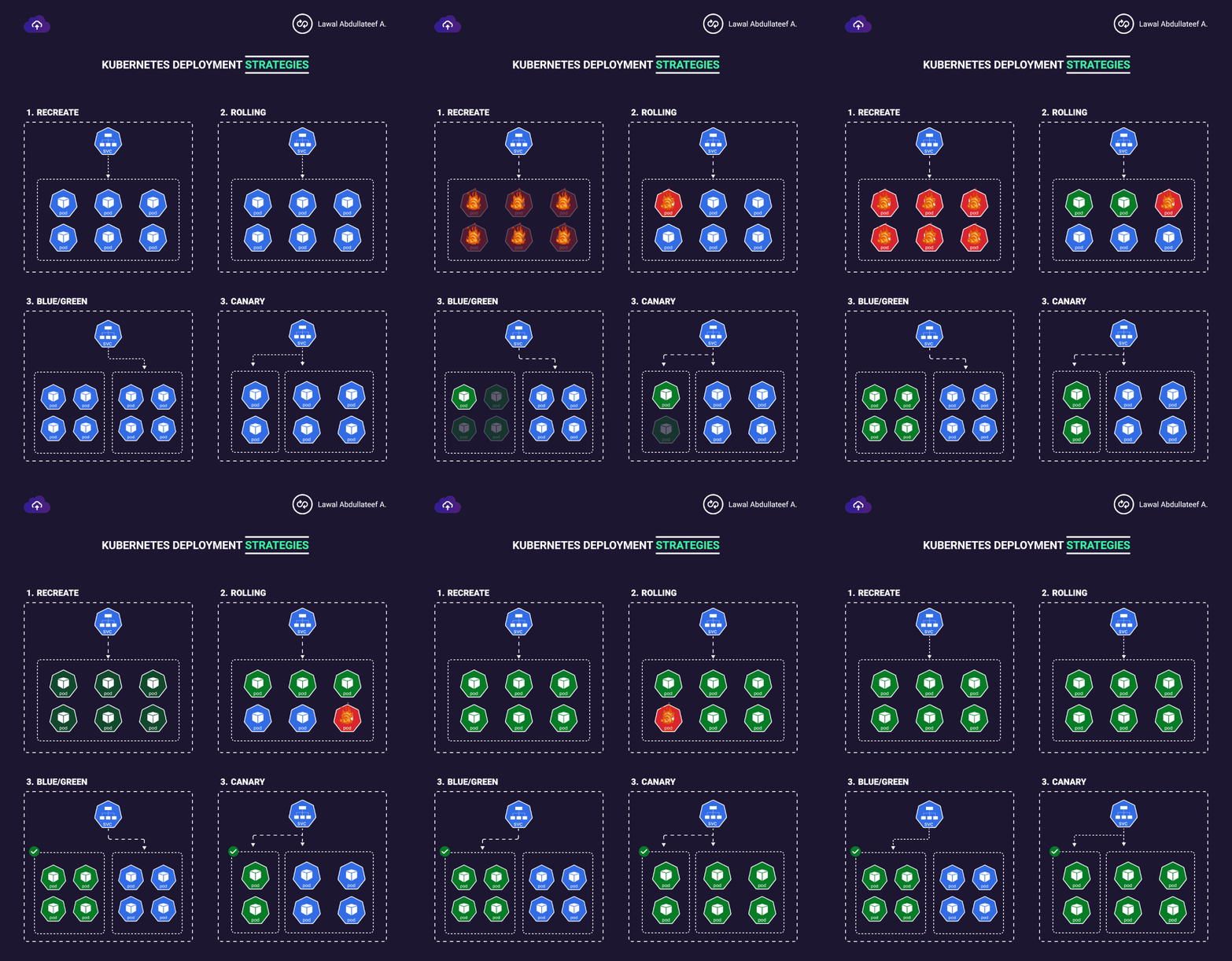
kubectl rollout status deployment/web
kubectl rollout history deployment/web
kubectl rollout undo deployment/web
- Service
A set of pods that work together in deployment and Service helps expose your deployment. This exposure can be to other deployments and/or to the outside world.
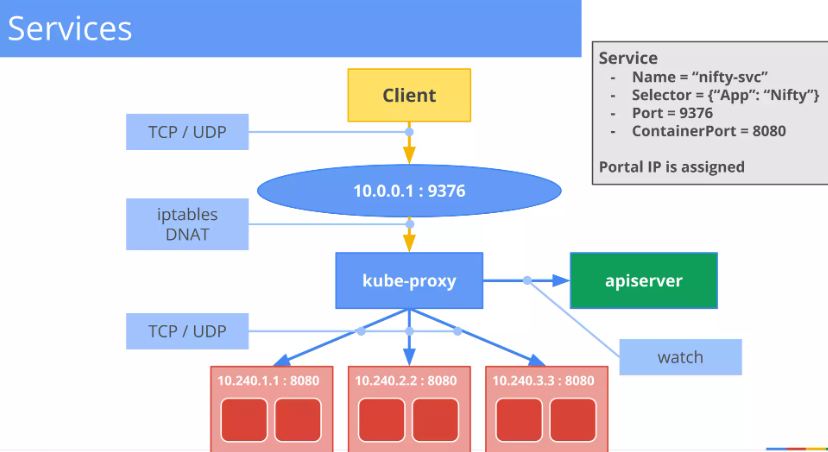
- Types of Services
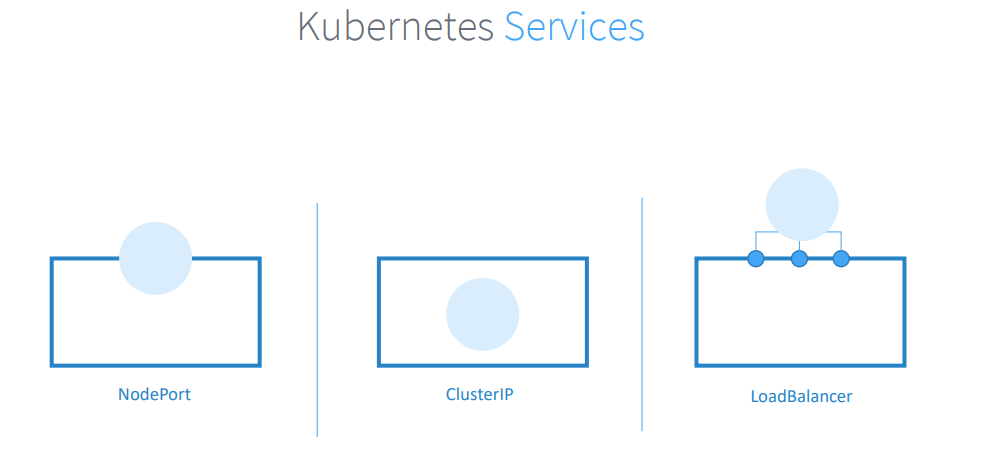
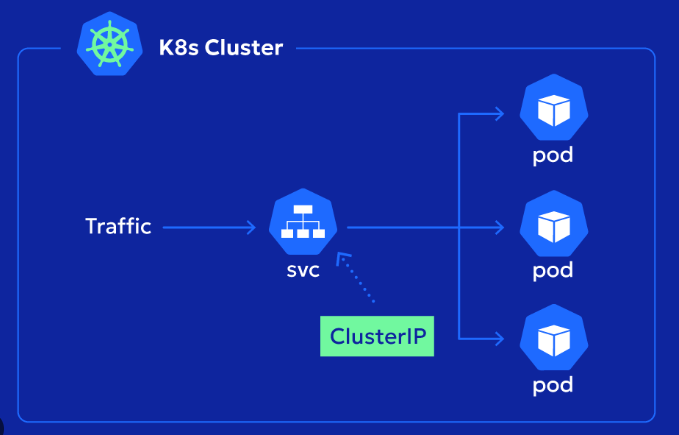
- ClusterIP; Reachable only from within the cluster
- NodePort; ClusterIP + fixed port on the every Node
- LoadBalancer; NodePort+ external IP cloud/provider
- Headless = ClusterIP:None; DNS returns Pod IPs directly. This is how
StatefulSetsgive each Pod a stable name - ExternalName; Maps Service to DNS name, returns CNAME record
apiVersion: v1
kind: Service
metadata:
  name: string
  namespace: string
  labels: {}
  annotations: {}
spec:
  selector: {}                        # Label selector to target Pods;  map[string]string
  ports:                             # Required: Port configuration;   []ServicePort  name,protocol, port, targetPort
  - name: string                     # Port name (optional)
    protocol: string                 # TCP, UDP, or SCTP (default: TCP)
    port: integer                    # Service port (required)
    targetPort: string/integer       # Pod port (default: same as port)
    nodePort: integer               # Node port (NodePort/LoadBalancer only)
  type: string                       # ClusterIP, NodePort, LoadBalancer, ExternalName
  clusterIP: string                  # Cluster-internal IP address
  clusterIPs: []                     # For dual-stack configurations
  externalIPs: []                    # External IP addresses
  sessionAffinity: string            # None or ClientIP; Distribute requests randomly across Pods ClientIP: Route requests from same client IP to same Pod
  sessionAffinityConfig: {}          # Session affinity configuration
    # clientIP:
    #   timeoutSeconds: 3600           # 1 hr
  externalName: string               # External DNS name (ExternalName only)
  externalTrafficPolicy: string      # Cluster or Local; `LoadBalancer`, `NodePort`
  internalTrafficPolicy: string      # Cluster or Local
  ipFamilies: []                     # IPv4, IPv6 (dual-stack)
  ipFamilyPolicy: string             # SingleStack, PreferDualStack, RequireDualStack
status:
  loadBalancer:                      # LoadBalancer status
    ingress: []                      # External load balancer ingress points
NodePort
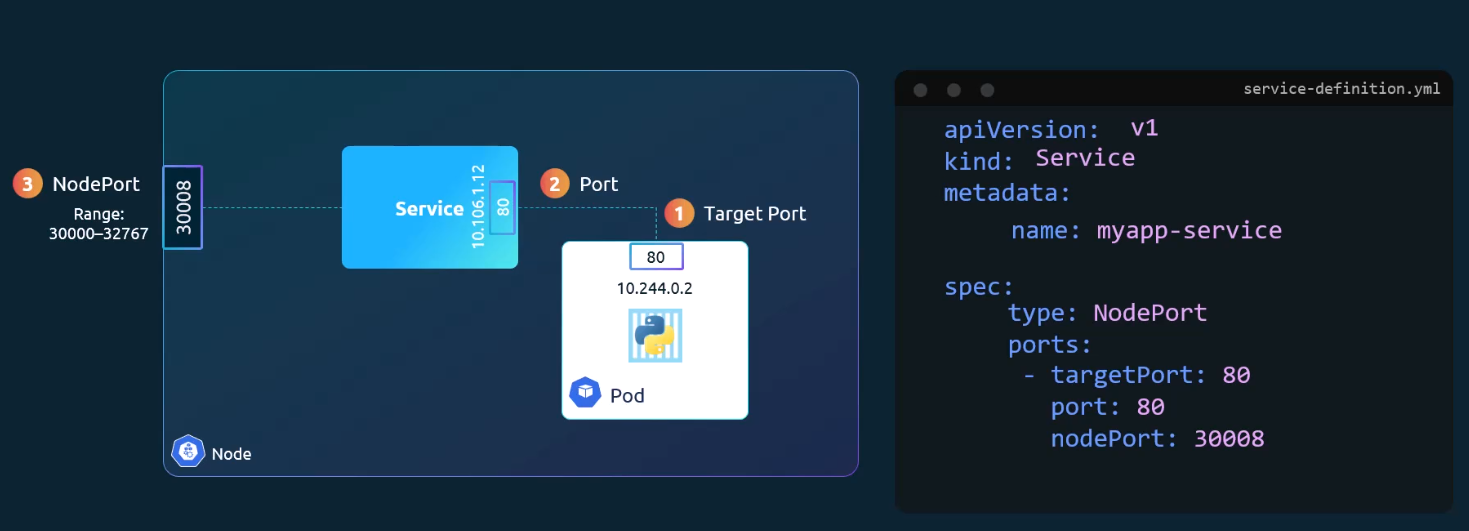
apiVersion: v1
kind: Service
metadata:
  name: web
  labels:
    app: web
spec:
  selector:
    app: web            # the SAME label the Deployment stamps on its Pods;            # picks every Pod carrying this label
  ports:
    - name: http
      port: 80          # the Service port — what clients hit
      targetPort: 8080  # the container port (containerPort in the Pod)
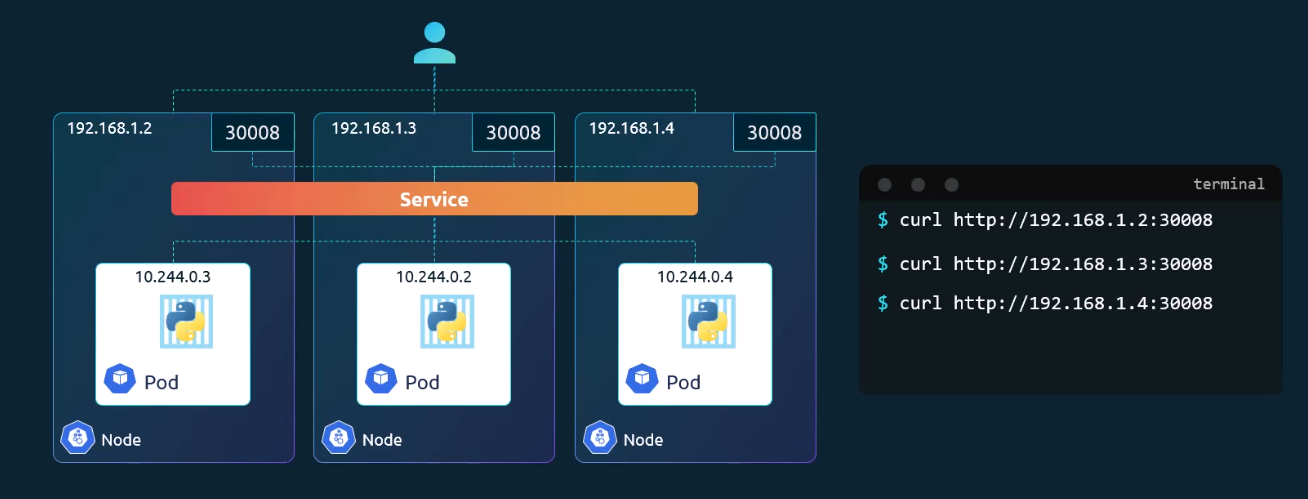
Your servie can reach within the Cluster ClusterIP.
Giving LoadBalancer every app its own burns on Cloud IP
One L7 entry point in front of many services Ingress
if your image is locally build and deploy, if requirement.txt changes it’ll be locally cached
ClusterIP
# POD
apiVersion: v1
kind: Pod
metadata:
  name: nginx-pod
  labels:
    app: Nifty
    role: fe
spec:
  containers:
  - name: nginx-container
    image: nginx
---
# SVC
apiVersion: v1
kind: Service
metadata:
  name: front-end
spec:
  selector:
    app: Nifty
    role: fe
  type: ClusterIP
  ports:
  - targetPort: 80
    port: 80
HEADLESS
LoadBalancer
- ConfigMap
- Secrets
- Namespace
It provide a mechanism for isolating groups of resources within a single cluster.
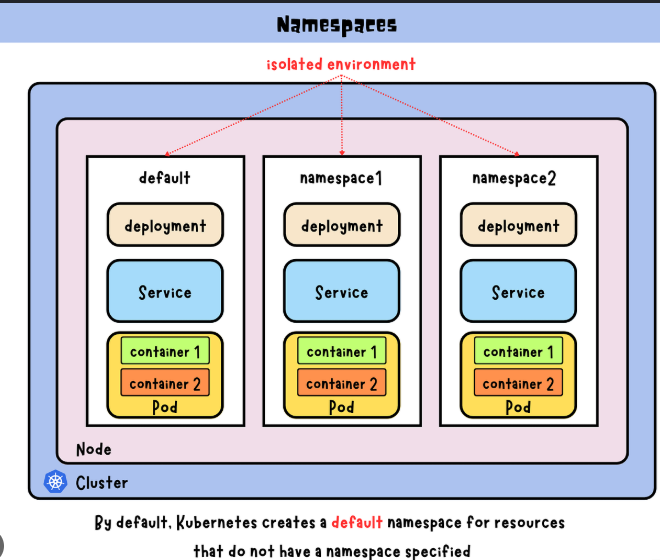
kubectl create ns NAMESPACE
kubectl config set-context --current --namespace=NAMESPACE
- StatefulSets
Similar to deployments but used for applications where copies of same application must coordianate with each other to maintain state. It manage the lifecycle of unique copies of pods. make sure networking & storage are reused if unhealthy pod need to be replaced.
- Volumes
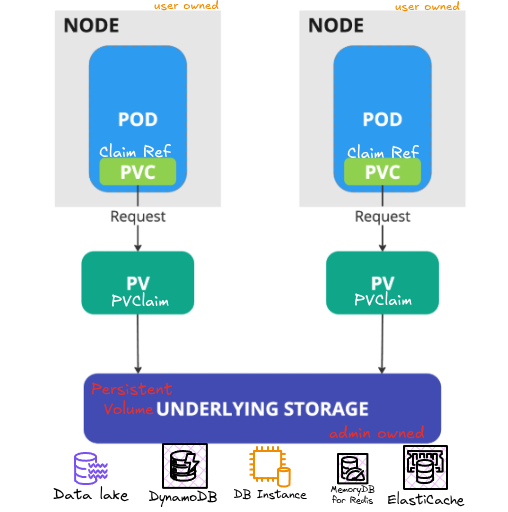
-
https://github.com/hvalfangst/kubernetes-encyclopedia/blob/main/service/REFERENCE.md
Cronjob
apiVersion: batch/v1
kind: CronJob
metadata:
  name: devops
spec:
  jobTemplate:
    metadata:
      name: devops
    spec:
      template:
        metadata: {}
        spec:
          containers:
          - image: nginx:latest
            name: cron-devops
            resources: {}
            command:
            - /bin/sh
            - -c
            - echo Welcome to xfusioncorp!
          restartPolicy: OnFailure
  schedule: '*/10 * * * *'                      # schedules
status: {}
kubectl create cronjob devops --image=nginx:latest --schedule='*/10 * * * *' --dry-run=client -o yml # modify it later as above
kubectl get cronjobs devops
kubectl describe cronjobs devops
kubectl get jobs --watch
pods=$(kubectl get pods --selector=job-name=devops-29764270 --output=jsonpath={.items[*].metadata.name})  # replace `devops-29764270` with actual pod which runs job
kubectl logs $pods #  Welcome to xfusioncorp!
NAME     SCHEDULE       TIMEZONE   SUSPEND   ACTIVE   LAST SCHEDULE   AGE
devops   */10 * * * *   <none>     False     0        4m6s            5m50s
------------------------------------------------
Name:                          devops
Namespace:                     default
Labels:                        <none>
Annotations:                   <none>
Schedule:                      */10 * * * *
Concurrency Policy:            Allow
Suspend:                       False
Successful Job History Limit:  3
Failed Job History Limit:      1
Starting Deadline Seconds:     <unset>
Selector:                      <unset>
Parallelism:                   <unset>
Completions:                   <unset>
Pod Template:
  Labels:  <none>
  Containers:
   cron-devops:
    Image:      nginx:latest
    Port:       <none>
    Host Port:  <none>
    Command:
      /bin/sh
      -c
      echo Welcome to xfusioncorp!
    Environment:     <none>
    Mounts:          <none>
  Volumes:           <none>
  Node-Selectors:    <none>
  Tolerations:       <none>
Last Schedule Time:  Tue, 04 Aug 2026 15:10:00 +0000
Active Jobs:         <none>
Events:
  Type    Reason            Age    From                Message
  ----    ------            ----   ----                -------
  Normal  SuccessfulCreate  4m48s  cronjob-controller  Created job devops-29764270
  Normal  SawCompletedJob   4m41s  cronjob-controller  Saw completed job: devops-29764270, condition: Complete
------------------------------------------------
NAME              STATUS     COMPLETIONS   DURATION   AGE
devops-29764270   Complete   1/1           7s         5m41s
Job
A Kubernetes Job is a workload controller that runs finite, short-lived tasks to completion and then stops.
apiVersion: batch/v1
kind: Job
metadata:
  name: countdown-devops
spec:
  template:
    metadata:
      name: countdown-devops
    spec:
      containers:
      - image: ubuntu:latest
        name: container-countdown-devops
        command:
        - /bin/sh
        - sleep 5
        resources: {}
      restartPolicy: Never
status: {}
kubectl get jobs
Kubernetes Components
https://www.xiaoyeshiyu.com/post/ff15.html
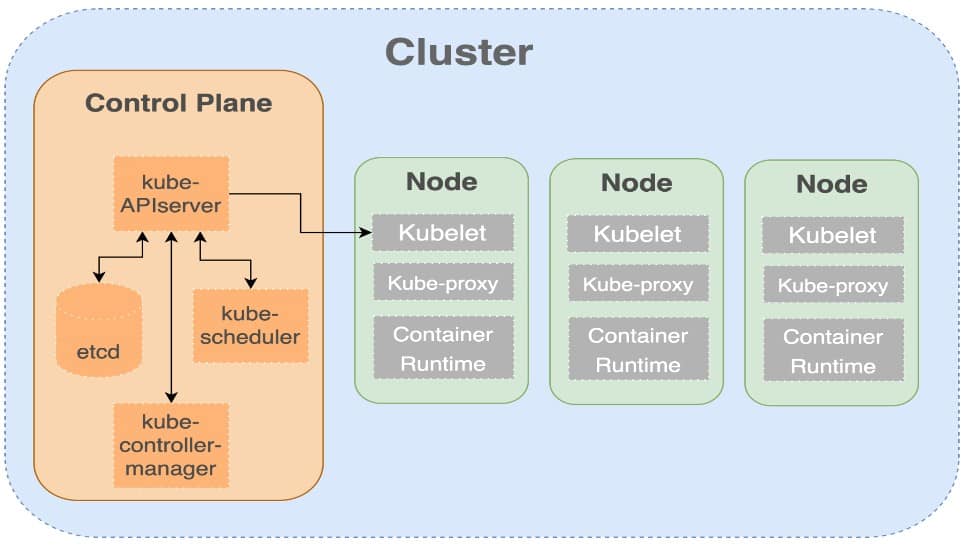
- API Server: responsible for communication with kubelet on the worker nodes.
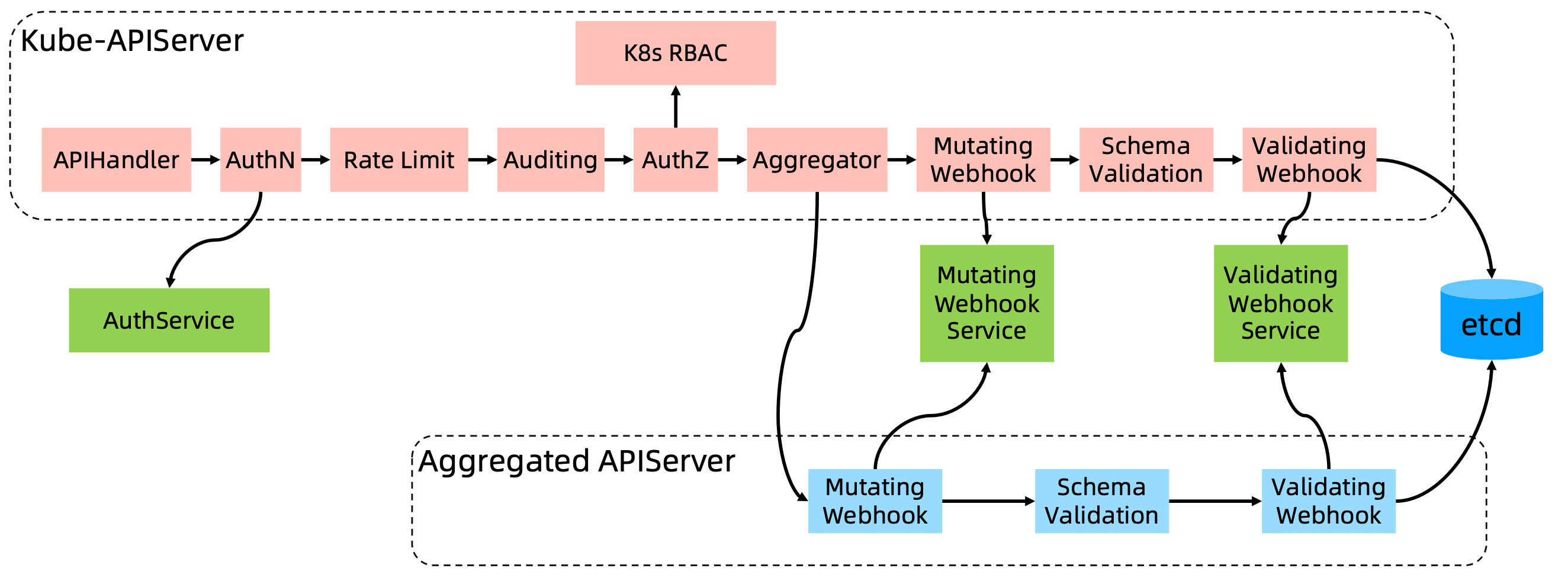
Authentication,Authorizationof the requestor. It is the one who communicate with Etcd
The access process for APIServer is HTTP Router very similar to that of other services,
AuthNAuthenticationRate LimiterAuditingAudit logs record operationsAuthzAuthentication, whichRBACdetermines whether the permissions are satisfiedAggregatorare used when you need to add/modify attributes to a reqest, or when you want to bypass Kubernetes native logic and use your own custom logicAPIServer. Examples includekubectl top nodethese plugins.validationValidators, syntax validators, etc.
- Etcd: key-value store of the critical state of system. Distributed Core Logic snapsotting the status of the k8s cluster developed CoreOS used for service discovery, shared configuration, and consistency assurance (such as database leader election, distributed locks ( CAS, CAD ), etc.)
- CAS Compare And Swap
- CAD Compare And Delete
Store every object’s spec and status. Lose etcd, lose the cluster’s memory
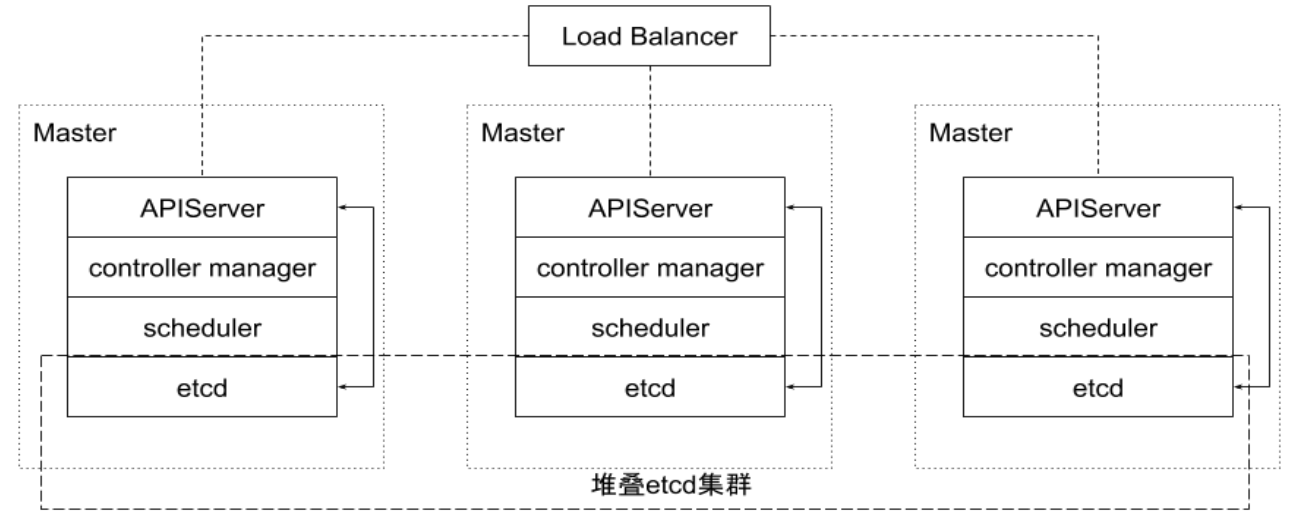
Microservices write their IP addresses and ports into etcd.
b
- Kube Controller Manager: responsible for monitoring the shared state of cluster through apiserver and making it to desired state Reconcillation Loops
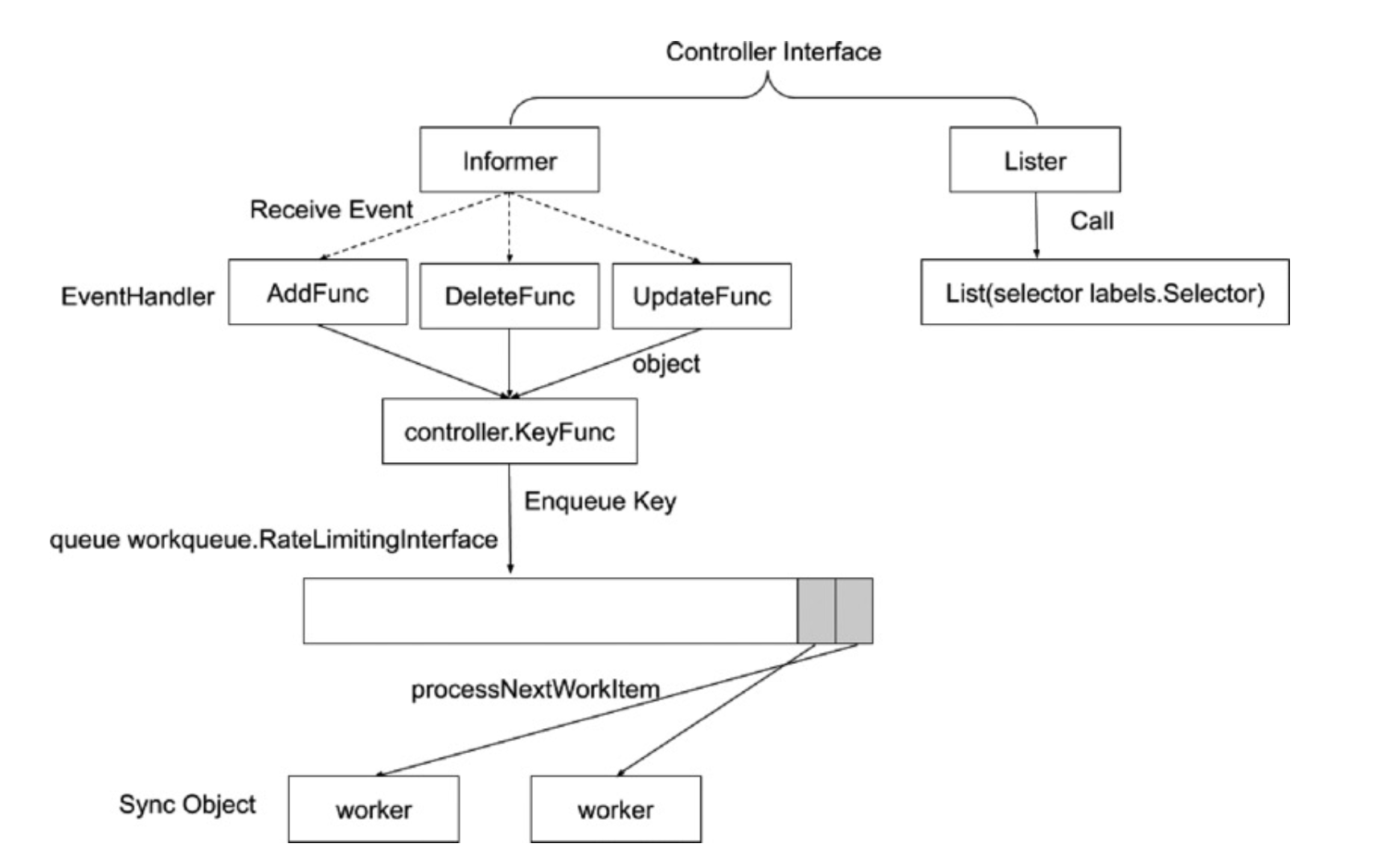
-
Kube Scheduler: responsbile for select the worker node for a POD, and provision on target node according to resource specification (affinity, taints,resources) . Kubelet does the running
-
Kubelet The node’s Agent watches the API server for pods assign to the ndoe reports their status back.
-
Kube-proxy Programs the node’s networking as a
Service IPreaches the right pod -
Container Runtime Kubelet calls over the CRI to pull image and start containers
API Server
Etcd
Kube Controller Manager
Kube Scheduler:
# desired state
apiVersion:
kind:
metadata:
spec:
  ...

# observed state
status:
  phase:
  conditions: [...]
Helm
It’s a kubernets package manager
similar,
- pip to python3
- apt to debian
sudo apt-get install curl gpg apt-transport-https --yes
curl -fsSL https://packages.buildkite.com/helm-linux/helm-debian/gpgkey | gpg --dearmor | sudo tee /usr/share/keyrings/helm.gpg > /dev/null
echo "deb [signed-by=/usr/share/keyrings/helm.gpg] https://packages.buildkite.com/helm-linux/helm-debian/any/ any main" | sudo tee /etc/apt/sources.list.d/helm-stable-debian.list
sudo apt-get update
sudo apt-get install helm
chart packagin
my-chart/
.
├── templates         # k8s yaml tempaltes manifests
│__ ├── deployment.yaml
│__ ├── ingress.yaml
│__ └── service.yaml
├── chart.yaml           # metadata like, name, version, deps
└── values.yaml          # default config